Stock APIs: Practical Guide and Best Options

Learn how to choose the right stock API, compare providers, and see why Alpha Vantage is a top choice for market data.

Author: Aditi Upadhyay

Published: 2026-07-21T00:00:00.000Z

Updated: 2026-07-20T22:25:09.619Z

Categories:Finance
Tags:Stock marketFinancial data

Almost everyone building something with market data starts from the same wrong assumption: that the hard part is getting the data.


It isn't. Free stock data is everywhere. The hard part is choosing a source whose coverage, latency, data model, and limits match what you're building and discovering the mismatch before you (or your favorite coding tool) have already written three thousand lines of code against it, not after.


This guide is about making that choice deliberately. We'll cover what a stock API is at the general level, the categories of data you can pull, how to call one correctly (with sample Python code), and the criteria that separate a toy from something you can ship.


Alpha Vantage is used throughout as a concrete example, partly because it's popular and well-documented, and partly because its AI readiness, which bears additional topical relevance in today’s agentic AI & MCP era.


What is a stock API


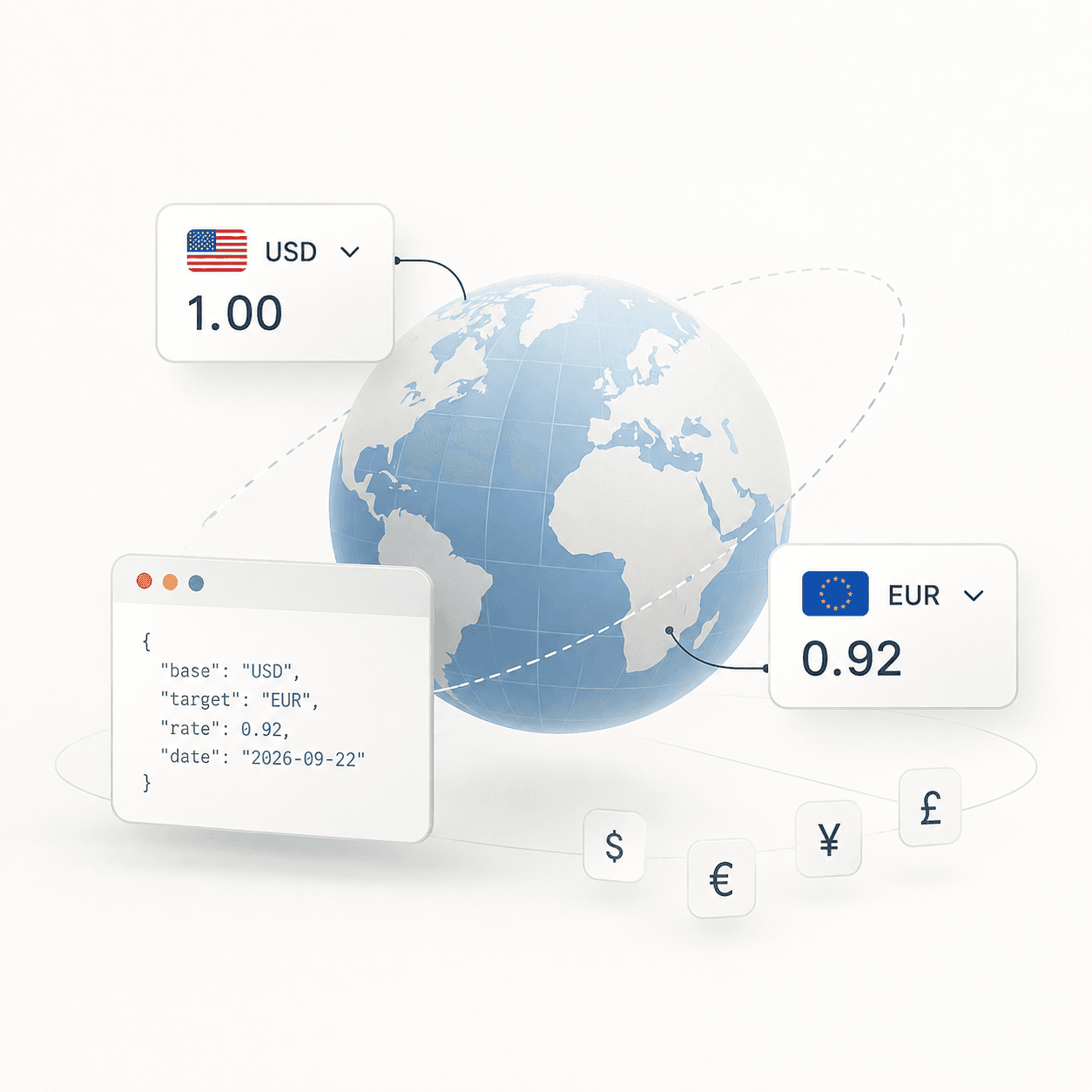
A stock API is an HTTP service that returns market data as structured text (almost always JSON, sometimes CSV) in response to a request. Instead of scraping a webpage or downloading a spreadsheet by hand, you send a request describing what you want, and you get back a machine-readable answer your code can parse.


What makes this genuinely useful is repeatability. The same request tomorrow returns tomorrow's data. You can loop over five hundred tickers, schedule a nightly pull, or feed quotes into a live dashboard, all without a human in the loop.


A stock API is, in a sense, a contract: "give me these parameters, and I'll give you this shape of data." Everything else, such as reliability, coverage, or pricing, is about how well the provider honors that contract.


The anatomy of a stock data request


Most stock APIs follow one of two designs: a REST-style layout with a different URL path per resource (/quotes/AAPL, /fundamentals/AAPL), or a single-endpoint design where one URL takes a parameter that selects the operation.


Alpha Vantage uses the second. Every call goes to https://www.alphavantage.co/query, and a function parameter decides what you get:


https://www.alphavantage.co/query?function=TIME_SERIES_DAILY&symbol=IBM&apikey=YOUR_KEY


Three things are worth noticing here, because they generalize to almost every provider.


First, authentication is a key. You pass an API key and it identifies your account for billing and rate limiting. Treat it like a password. Don't commit it to Git, and don't embed it in front-end JavaScript where anyone can read it in the browser.


Second, parameters shape the response. symbol picks the instrument; on many endpoints an outputsize toggles between a compact recent slice and the full history; a datatype switches between JSON and CSV. Learning an API is mostly learning its parameters.


Third (and this is where the AI/LLM elements come in): the raw HTTP request above is increasingly not how the data gets consumed at all. When a human writes an integration, they build requests like the one above.


But LLMs and AI agents don't hand-assemble URLs; they reach data through the Model Context Protocol (MCP), an open standard that exposes a provider's capabilities as tools an agent can discover and call in natural language. Instead of constructing ?function=TIME_SERIES_DAILY&symbol=IBM, an agent asks the server "what can you do?" (tools/list), then invokes the right tool (tools/call) with structured arguments. In other words, the model handles the plumbing.


This is no longer a niche concern. Alpha Vantage ships an official MCP server that is listed in Anthropic's Claude Connectors directory and works across the major agentic platforms (Claude and Claude Code, Cursor, VS Code, ChatGPT, Microsoft Azure AI Foundry, and others), exposing the same underlying functions (TIME_SERIES_DAILY, COMPANY_OVERVIEW, and the rest) as MCP tools.


Authentication is worth calling out here too: MCP servers commonly support OAuth in addition to a plain API key, which matters the moment an agent is acting on a user's behalf rather than running under your own credentials. The practical upshot: if you're building anything agentic, "does it have an MCP server?" is now as important a question as "is the REST API any good?"


The categories of market data


Data providers bundle a lot under one roof, but it falls into a handful of distinct classes. Knowing which datasets you need (and which you don't) is the single most important decision, because it drives everything about cost and provider choice.


  1. Quotes and real-time prices. The latest price, bid/ask, day's high and low, and volume for a symbol. Alpha Vantage's GLOBAL_QUOTE returns a single ticker's latest snapshot; REALTIME_BULK_QUOTES handles up to a hundred symbols in one call. The critical distinction is latency: "real-time" is a licensed, exchange-fed product that costs real money, while free and entry tiers typically serve data delayed by fifteen minutes or more. For a portfolio tracker that refreshes hourly, delayed is fine. For anything that reacts to price moves, it isn't and no amount of clever code closes that gap.
  2. Intraday and historical time series. OHLCV bars (open, high, low, close, volume) at intervals from one minute to one month. TIME_SERIES_INTRADAY gives you minute-level bars; TIME_SERIES_DAILY, _WEEKLY, and _MONTHLY give you the longer horizons, with roughly two decades of daily history available. This is the backbone of backtesting and quantitative research, and it's where data quality matters far more than feature count. More on that below.
  3. Fundamentals. The numbers behind the ticker: market cap, P/E and other ratios, and the three financial statements. Alpha Vantage exposes COMPANY_OVERVIEW for the summary metrics and INCOME_STATEMENT, BALANCE_SHEET, CASH_FLOW, and EARNINGS for the detail. Fundamentals power screeners and valuation models.
  4. Technical indicators. Rather than pulling raw prices and computing indicators yourself, most providers offer them precomputed: RSI, SMA, EMA, MACD, BBANDS and dozens more. Convenient, though computing your own from the raw series gives you more control and one fewer dependency.
  5. News, macro, and alternative data. Beyond prices, Alpha Vantage offers NEWS_SENTIMENT (articles scored for sentiment), macro series like REAL_GDP, CPI, and FEDERAL_FUNDS_RATE, plus forex and crypto endpoints. 


Calling a stock API the right way


Here's a “minimal viable” Python example. It checks for the error patterns that a naive version would miss, and it respects the rate limit instead of getting itself throttled.


import time

import requests


BASE_URL = "https://www.alphavantage.co/query"

API_KEY = "YOUR_KEY"


def get_daily(symbol, outputsize="compact"):

    params = {

        "function": "TIME_SERIES_DAILY",

        "symbol": symbol,

        "outputsize": outputsize, # "compact" = ~100 days, "full" = 20+ years

        "apikey": API_KEY,

    }

    resp = requests.get(BASE_URL, params=params, timeout=15)

    resp.raise_for_status()     # catches real HTTP errors (5xx, network)

    data = resp.json()


    # The 200-OK-but-actually-an-error trap:

    if "Error Message" in data:

        raise ValueError(f"Bad request for {symbol}: {data['Error Message']}")

    if "Note" in data or "Information" in data:

        raise RuntimeError("Rate limit or usage notice hit — back off and retry.")


    return data["Time Series (Daily)"]


symbols = ["AAPL", "MSFT", "IBM"]

for sym in symbols:

    series = get_daily(sym)

    latest_date = max(series)

    bar = series[latest_date]

    print(sym, latest_date, bar["4. close"], bar["5. volume"])

    time.sleep(13) # free tier ≈ 5 req/min → space calls ~12s apart


The time.sleep() looks crude, and for production you'd replace it with a proper rate limiter or a queue. But the principle is the point: the API's limits are part of your program's logic, not an afterthought. The other habit worth building in from day one is caching. Historical daily bars for a closed trading day never change. Fetching them twice is wasted quota. Store what you pull and only request what you don't already have.


What "production-ready" means


Plenty of APIs demo beautifully and fall apart in production. Here's what to verify.


Coverage that matches your universe. "Global" is a marketing word; check the specific exchanges, asset classes, and, critically, whether fundamentals extend to the non-US names you care about. Alpha Vantage covers a large ticker universe across many exchanges, making it a versatile option (e.g., if you're building a European or emerging-markets screener, you won’t need to switch providers).


Latency you can afford. Decide early whether you truly need real-time. With Alpha Vantage, delayed US data comes with the entry paid plan while genuine real-time US quotes begin at the $99.99/month tier. That's a clarifying question to ask of any provider: at what price does the delay actually go away?


Rate limits. Don't eyeball this. The free tier allows 25 requests per day, which may be sufficient for a short watchlist app. Paid tiers remove the daily cap and raise the per-minute ceiling from 75 up to 1,200 depending on plan. Bulk endpoints (a hundred symbols per call) can collapse that number dramatically, so factor them in.


Data quality, which is invisible until it isn't. Three quiet failure modes cost people real money:

  • Adjusted vs. raw prices. A raw close ignores stock splits and dividends; an adjusted close accounts for them. Backtest on raw prices and a 4-for-1 split looks like a 75% crash your strategy "reacts" to. Alpha Vantage offers adjusted series. Know which one you're pulling.
  • Survivorship bias. If your historical universe only contains companies that still exist today, every backtest is secretly rigged toward winners. A LISTING_STATUS endpoint that includes delisted tickers is the fix, and its absence is a red flag.
  • Gaps and revisions. Spot-check a few known events (e.g., an earnings date, a split, a volatile session) against a second source. Silent gaps are worse than obvious errors.


Documentation and licensing. Good docs save days; bad ones cost them. And read the licensing terms: many affordable plans permit personal use only, and redistributing data or building a commercial product on top requires separate, exchange-licensed arrangements. This is easy to overlook and expensive to get wrong.


Where Alpha Vantage fits


Alpha Vantage is an excellent “all-rounder” fit for quantitative research, backtesting, algorithmic trading, fintech apps, and agentic AI workflows on major global stock markets.


The free key is generous enough to build a real prototype, the single-endpoint design is quick to learn, the historical depth is significant (4+ decades), and the breadth (equities, ETFs, mutual funds, options, indices, forex, crypto, fundamentals, news, macro, etc.) means one integration covers a lot of ground.


It's a weaker fit when you need true low-latency data feeds at the nanosecond level. Exchange co-located providers like NASDAQ Data Link, Bloomberg b-pipe, or paid institutional feeds may be more suitable for these ultra-low-latency use cases. 


A simple way to choose


Work through four questions in order, and the field narrows fast:


  1. What data class do I need? Real-time quotes, historical bars, fundamentals, or a mix. This alone eliminates most providers.
  2. How fresh must it be? If delayed data works, your options and costs expand enormously. If you need real-time, budget for it and verify the license.
  3. What's my request volume? Turn your refresh frequency and universe size into calls-per-minute and calls-per-day, then match that to a tier — including a headroom margin.
  4. Is this personal or commercial? Get the licensing question answered in writing before you build, not after you launch.


Prototype against the free tier of your top one or two candidates, run your tickers and your edge cases through them, and only then commit. An afternoon of testing beats a month of rework.


FAQ


Q1. Is there a genuinely free stock API?


Yes — Alpha Vantage's free key is a real one, not a trial, and covers most datasets. Free plans from most API providers, however, are typically built for learning and prototypes, not for serving users and powering production applications.


Q2. Can I get real-time data?


Only from a provider that explicitly licenses it, and typically only on a paid plan. With Alpha Vantage, real-time US quotes start around the $99.99/month tier; lower tiers serve delayed data. Real-time data typically requires exchange licenses. Alpha Vantage is licensed by NASDAQ, CBOE, OPRA, London Stock Exchange, among other global exchanges and regulatory bodies. If a provider is silent about their exchange relationships, you may want to verify its licensing status before proceeding, even if they promise you “free” real-time data.


Q3. How is a stock API different from the old Yahoo Finance endpoints?


Those unofficial endpoints were convenient but never a supported product. They changed without warning and broke integrations. A documented, versioned API with a support channel and a service commitment is a different category of thing, and that difference is exactly what matters once real users depend on your app.


Q4. Do I need the paid technical-indicator endpoints?


Not necessarily. Precomputed indicators like RSI or MACD are convenient turn-key solutions, but you can compute them yourself from the raw price series with a few lines of code, which saves calls and gives you full control over the parameters.


The takeaway


Choosing a stock API is about choosing a data infrastructure, and infrastructure decisions compound. The good news is that the decision is tractable once you stop asking "which API is best?" and start asking "which API fits this data class, this latency requirement, this volume, and this license?"


Answer those honestly, test against real tickers, and you'll pick something you can build on for years instead of replacing in a quarter. Alpha Vantage is a strong default for a large share of developers and finance professionals precisely because its enterprise-grade data quality, exchange licensing status, market coverage, pricing, and AI-readiness are public and clear enough to reason about, and reasoning clearly is the whole game.
Stock APIs: Practical Guide and Best Options

Learn how to choose the right stock API, compare providers, and see why Alpha Vantage is a top choice for market data.
Stock APIs: Practical Guide and Best Options

Almost everyone building something with market data starts from the same wrong assumption: that the hard part is getting the data.

It isn't. Free stock data is everywhere. The hard part is choosing a source whose coverage, latency, data model, and limits match what you're building and discovering the mismatch before you (or your favorite coding tool) have already written three thousand lines of code against it, not after.

This guide is about making that choice deliberately. We'll cover what a stock API is at the general level, the categories of data you can pull, how to call one correctly (with sample Python code), and the criteria that separate a toy from something you can ship.

Alpha Vantage is used throughout as a concrete example, partly because it's popular and well-documented, and partly because its AI readiness, which bears additional topical relevance in today’s agentic AI & MCP era.

What is a stock API

A stock API is an HTTP service that returns market data as structured text (almost always JSON, sometimes CSV) in response to a request. Instead of scraping a webpage or downloading a spreadsheet by hand, you send a request describing what you want, and you get back a machine-readable answer your code can parse.

What makes this genuinely useful is repeatability. The same request tomorrow returns tomorrow's data. You can loop over five hundred tickers, schedule a nightly pull, or feed quotes into a live dashboard, all without a human in the loop.

A stock API is, in a sense, a contract: "give me these parameters, and I'll give you this shape of data." Everything else, such as reliability, coverage, or pricing, is about how well the provider honors that contract.

The anatomy of a stock data request

Most stock APIs follow one of two designs: a REST-style layout with a different URL path per resource (/quotes/AAPL, /fundamentals/AAPL), or a single-endpoint design where one URL takes a parameter that selects the operation.

Alpha Vantage uses the second. Every call goes to https://www.alphavantage.co/query, and a function parameter decides what you get:

https://www.alphavantage.co/query?function=TIME_SERIES_DAILY&symbol=IBM&apikey=YOUR_KEY

Three things are worth noticing here, because they generalize to almost every provider.

First, authentication is a key. You pass an API key and it identifies your account for billing and rate limiting. Treat it like a password. Don't commit it to Git, and don't embed it in front-end JavaScript where anyone can read it in the browser.

Second, parameters shape the response. symbol picks the instrument; on many endpoints an outputsize toggles between a compact recent slice and the full history; a datatype switches between JSON and CSV. Learning an API is mostly learning its parameters.

Third (and this is where the AI/LLM elements come in): the raw HTTP request above is increasingly not how the data gets consumed at all. When a human writes an integration, they build requests like the one above.

But LLMs and AI agents don't hand-assemble URLs; they reach data through the Model Context Protocol (MCP), an open standard that exposes a provider's capabilities as tools an agent can discover and call in natural language. Instead of constructing ?function=TIME_SERIES_DAILY&symbol=IBM, an agent asks the server "what can you do?" (tools/list), then invokes the right tool (tools/call) with structured arguments. In other words, the model handles the plumbing.

This is no longer a niche concern. Alpha Vantage ships an official MCP server that is listed in Anthropic's Claude Connectors directory and works across the major agentic platforms (Claude and Claude Code, Cursor, VS Code, ChatGPT, Microsoft Azure AI Foundry, and others), exposing the same underlying functions (TIME_SERIES_DAILY, COMPANY_OVERVIEW, and the rest) as MCP tools.

Authentication is worth calling out here too: MCP servers commonly support OAuth in addition to a plain API key, which matters the moment an agent is acting on a user's behalf rather than running under your own credentials. The practical upshot: if you're building anything agentic, "does it have an MCP server?" is now as important a question as "is the REST API any good?"

The categories of market data

Data providers bundle a lot under one roof, but it falls into a handful of distinct classes. Knowing which datasets you need (and which you don't) is the single most important decision, because it drives everything about cost and provider choice.

  1. Quotes and real-time prices. The latest price, bid/ask, day's high and low, and volume for a symbol. Alpha Vantage's GLOBAL_QUOTE returns a single ticker's latest snapshot; REALTIME_BULK_QUOTES handles up to a hundred symbols in one call. The critical distinction is latency: "real-time" is a licensed, exchange-fed product that costs real money, while free and entry tiers typically serve data delayed by fifteen minutes or more. For a portfolio tracker that refreshes hourly, delayed is fine. For anything that reacts to price moves, it isn't and no amount of clever code closes that gap.
  2. Intraday and historical time series. OHLCV bars (open, high, low, close, volume) at intervals from one minute to one month. TIME_SERIES_INTRADAY gives you minute-level bars; TIME_SERIES_DAILY, _WEEKLY, and _MONTHLY give you the longer horizons, with roughly two decades of daily history available. This is the backbone of backtesting and quantitative research, and it's where data quality matters far more than feature count. More on that below.
  3. Fundamentals. The numbers behind the ticker: market cap, P/E and other ratios, and the three financial statements. Alpha Vantage exposes COMPANY_OVERVIEW for the summary metrics and INCOME_STATEMENT, BALANCE_SHEET, CASH_FLOW, and EARNINGS for the detail. Fundamentals power screeners and valuation models.
  4. Technical indicators. Rather than pulling raw prices and computing indicators yourself, most providers offer them precomputed: RSI, SMA, EMA, MACD, BBANDS and dozens more. Convenient, though computing your own from the raw series gives you more control and one fewer dependency.
  5. News, macro, and alternative data. Beyond prices, Alpha Vantage offers NEWS_SENTIMENT (articles scored for sentiment), macro series like REAL_GDP, CPI, and FEDERAL_FUNDS_RATE, plus forex and crypto endpoints. 

Calling a stock API the right way

Here's a “minimal viable” Python example. It checks for the error patterns that a naive version would miss, and it respects the rate limit instead of getting itself throttled.

import time

import requests

BASE_URL = "https://www.alphavantage.co/query"

API_KEY = "YOUR_KEY"

def get_daily(symbol, outputsize="compact"):

    params = {

        "function": "TIME_SERIES_DAILY",

        "symbol": symbol,

        "outputsize": outputsize, # "compact" = ~100 days, "full" = 20+ years

        "apikey": API_KEY,

    }

    resp = requests.get(BASE_URL, params=params, timeout=15)

    resp.raise_for_status()     # catches real HTTP errors (5xx, network)

    data = resp.json()

    # The 200-OK-but-actually-an-error trap:

    if "Error Message" in data:

        raise ValueError(f"Bad request for {symbol}: {data['Error Message']}")

    if "Note" in data or "Information" in data:

        raise RuntimeError("Rate limit or usage notice hit — back off and retry.")

    return data["Time Series (Daily)"]

symbols = ["AAPL", "MSFT", "IBM"]

for sym in symbols:

    series = get_daily(sym)

    latest_date = max(series)

    bar = series[latest_date]

    print(sym, latest_date, bar["4. close"], bar["5. volume"])

    time.sleep(13) # free tier ≈ 5 req/min → space calls ~12s apart

The time.sleep() looks crude, and for production you'd replace it with a proper rate limiter or a queue. But the principle is the point: the API's limits are part of your program's logic, not an afterthought. The other habit worth building in from day one is caching. Historical daily bars for a closed trading day never change. Fetching them twice is wasted quota. Store what you pull and only request what you don't already have.

What "production-ready" means

Plenty of APIs demo beautifully and fall apart in production. Here's what to verify.

Coverage that matches your universe. "Global" is a marketing word; check the specific exchanges, asset classes, and, critically, whether fundamentals extend to the non-US names you care about. Alpha Vantage covers a large ticker universe across many exchanges, making it a versatile option (e.g., if you're building a European or emerging-markets screener, you won’t need to switch providers).

Latency you can afford. Decide early whether you truly need real-time. With Alpha Vantage, delayed US data comes with the entry paid plan while genuine real-time US quotes begin at the $99.99/month tier. That's a clarifying question to ask of any provider: at what price does the delay actually go away?

Rate limits. Don't eyeball this. The free tier allows 25 requests per day, which may be sufficient for a short watchlist app. Paid tiers remove the daily cap and raise the per-minute ceiling from 75 up to 1,200 depending on plan. Bulk endpoints (a hundred symbols per call) can collapse that number dramatically, so factor them in.

Data quality, which is invisible until it isn't. Three quiet failure modes cost people real money:

  • Adjusted vs. raw prices. A raw close ignores stock splits and dividends; an adjusted close accounts for them. Backtest on raw prices and a 4-for-1 split looks like a 75% crash your strategy "reacts" to. Alpha Vantage offers adjusted series. Know which one you're pulling.
  • Survivorship bias. If your historical universe only contains companies that still exist today, every backtest is secretly rigged toward winners. A LISTING_STATUS endpoint that includes delisted tickers is the fix, and its absence is a red flag.
  • Gaps and revisions. Spot-check a few known events (e.g., an earnings date, a split, a volatile session) against a second source. Silent gaps are worse than obvious errors.

Documentation and licensing. Good docs save days; bad ones cost them. And read the licensing terms: many affordable plans permit personal use only, and redistributing data or building a commercial product on top requires separate, exchange-licensed arrangements. This is easy to overlook and expensive to get wrong.

Where Alpha Vantage fits

Alpha Vantage is an excellent “all-rounder” fit for quantitative research, backtesting, algorithmic trading, fintech apps, and agentic AI workflows on major global stock markets.

The free key is generous enough to build a real prototype, the single-endpoint design is quick to learn, the historical depth is significant (4+ decades), and the breadth (equities, ETFs, mutual funds, options, indices, forex, crypto, fundamentals, news, macro, etc.) means one integration covers a lot of ground.

It's a weaker fit when you need true low-latency data feeds at the nanosecond level. Exchange co-located providers like NASDAQ Data Link, Bloomberg b-pipe, or paid institutional feeds may be more suitable for these ultra-low-latency use cases. 

A simple way to choose

Work through four questions in order, and the field narrows fast:

  1. What data class do I need? Real-time quotes, historical bars, fundamentals, or a mix. This alone eliminates most providers.
  2. How fresh must it be? If delayed data works, your options and costs expand enormously. If you need real-time, budget for it and verify the license.
  3. What's my request volume? Turn your refresh frequency and universe size into calls-per-minute and calls-per-day, then match that to a tier — including a headroom margin.
  4. Is this personal or commercial? Get the licensing question answered in writing before you build, not after you launch.

Prototype against the free tier of your top one or two candidates, run your tickers and your edge cases through them, and only then commit. An afternoon of testing beats a month of rework.

FAQ

Q1. Is there a genuinely free stock API?

Yes — Alpha Vantage's free key is a real one, not a trial, and covers most datasets. Free plans from most API providers, however, are typically built for learning and prototypes, not for serving users and powering production applications.

Q2. Can I get real-time data?

Only from a provider that explicitly licenses it, and typically only on a paid plan. With Alpha Vantage, real-time US quotes start around the $99.99/month tier; lower tiers serve delayed data. Real-time data typically requires exchange licenses. Alpha Vantage is licensed by NASDAQ, CBOE, OPRA, London Stock Exchange, among other global exchanges and regulatory bodies. If a provider is silent about their exchange relationships, you may want to verify its licensing status before proceeding, even if they promise you “free” real-time data.

Q3. How is a stock API different from the old Yahoo Finance endpoints?

Those unofficial endpoints were convenient but never a supported product. They changed without warning and broke integrations. A documented, versioned API with a support channel and a service commitment is a different category of thing, and that difference is exactly what matters once real users depend on your app.

Q4. Do I need the paid technical-indicator endpoints?

Not necessarily. Precomputed indicators like RSI or MACD are convenient turn-key solutions, but you can compute them yourself from the raw price series with a few lines of code, which saves calls and gives you full control over the parameters.

The takeaway

Choosing a stock API is about choosing a data infrastructure, and infrastructure decisions compound. The good news is that the decision is tractable once you stop asking "which API is best?" and start asking "which API fits this data class, this latency requirement, this volume, and this license?"

Answer those honestly, test against real tickers, and you'll pick something you can build on for years instead of replacing in a quarter. Alpha Vantage is a strong default for a large share of developers and finance professionals precisely because its enterprise-grade data quality, exchange licensing status, market coverage, pricing, and AI-readiness are public and clear enough to reason about, and reasoning clearly is the whole game.